Reading a Book in a Foreign Language
This content contains affiliate links. When you purchase through these links, nosotros may earn an chapter commission.

For some of us, beingness able to read in another linguistic communication is the dream. In that location's this general thought out there that learning a language is primarily about spoken language and verbal advice, and that reading is only a ways to that end. But sometimes, reading in that other linguistic communication is the entire point. And the dream of doing so may be closer than you realize.
Whether you want to amend your language skills through reading, or just want to be able to read original language texts now, you lot actually probably can.
In one case upon a time, I really, really wanted to be able to read French literature in French. The only problem was that I had pretty much entirely forgotten the French I'd learned in high school. Over fourth dimension, though, I worked my mode up to an advanced French reading level, and a lot of how I got good at reading was by…wait for it…reading. Only of course, merely moving your optics over text you don't sympathize at all isn't going to help you improve. Below are some specific methods and resources I've used to strengthen my strange language reading skills.
Graded Readers, Parallel Texts, or Interlinear Books
I'chiliad not going to get into learning to read a language through children's books simply now, though that's certainly a valid method for all ages. I'chiliad also not going to get into graphic novels and comics in the language of your choice, but it's worth mentioning that these tin be excellent context-based reading exercise. (Non to mention completely legitimate reading in their ain right.)
In this article, I want to specifically focus on less obvious means to read foreign linguistic communication material that you might think is out of your reach.
via GIPHY
If you're a beginner who has some grasp of the linguistic communication y'all want to read in, or if you're an intermediate learner who feels miles abroad from actual fluent reading, the resources below tin can be really helpful.
Graded Readers
Graded readers, or simply "readers," are books in which material has been curated for or written to correspond with a certain reading level. These exist for children in their native languages, only are likewise often created for foreign linguistic communication students.
You can find readers in bookstores or online, by searching for "graded reader" and the name of the language y'all want to read in. Readers often include annotations for language students that explain potentially confusing phrases, and sometimes glossaries.
This might sound like you're dealing with a glorified textbook. Simply in many cases, readers have been built off of original literary texts. This is exciting, because it means that you can offset enjoying "real" writing now.
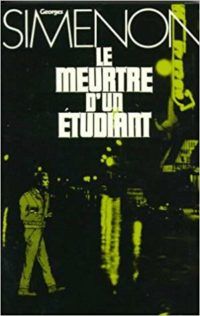 The start book I read all the way through in French was the Georges Simenon mystery Le Meurtre d'un Étudiant (The Murder of a Student). But I don't count information technology as my beginning (even if maybe I should) considering information technology was a reader version. If non for that, I would have struggled with a lot of the vocabulary, and probably given up. But I was able to look up words in the back of the book, and have trickier concepts explained to me right in that location on the folio. And then instead of giving upwardly, I enjoyed a full, rich French-language literary experience, although I was merely at an intermediate level (if that).
Parallel Texts
The concept of parallel texts is pretty uncomplicated. You have a page in a language you're learning, and a translation on the opposite page in a language you know. With ebooks, the format usually changes so that pages alternate between languages.
You might be wondering how useful this is. Sure, it'due south admittedly tempting to merely offset reading the translated text. But hey, there also aren't whatsoever rules here. Deciding that literature is more important than language for the moment isn't a primal sin. It doesn't even necessarily injure your language learning. Perchance you're all the same a beginner with a low overall vocabulary, for case, and want to preview some college-level texts to motivate yourself. Maybe you'll notice one or two yous really like and take the opportunity to compare the translation and original line by line.
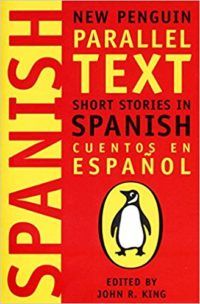 Penguin Parallel Texts are available for a multifariousness of languages. These requite you lot a selection of curt stories, each 1 past a different writer. Curt Stories in Spanish, for example, includes texts from Spanish and Latin American writers, including Isabel Allende, Soledad Puértolas, Julio Cortázar, and others. These books tin can exist quite fun, because you get a chance to sample a variety of literature, and may just find some new favorite authors. As well, recent editions in this serial seem to have made an endeavor to exist more inclusive and to add modern writers alongside classic ones.
Interlinear Books
Interlinear books are different from parallel texts in that you get a translation underneath what you're reading. While it depends on the person, this choice can be better than parallel texts both for uninterrupted reading and for absorbing new vocabulary. It's harder to resist the temptation to glance at the translation, aye. But you as well can't really look abroad from the original text.
Interlinear Books is a relatively new visitor offering classics in different languages in interlinear ebook grade. You can apply their books to read original texts by Kafka, Machado de Assis, Rubén Darío, Selma Lagerlöf, and others.
Translation Features on Ereaders
If yous take an ereader, you lot may exist able to gear up yourself upwardly to become instant translations for foreign linguistic communication texts. Depending on the options available, you might cull to translate through a dictionary, or through online look-ups. This isn't actually any different from looking stuff upwardly in any language you normally use, and you may even have the option to fix up a dictionary in the language you're learning for monolingual translations. It all just depends on what yous tin can go for the linguistic communication(due south) you want and the reader y'all have.
Currently, at to the lowest degree some versions of Kindle and Kobo back up dictionary translation lookups. Kindle supports online lookups, equally does Nook.
Using electronic translation means y'all can choose more hard texts to read in a language you don't know well all the same, and just tap on a give-and-take to look it up. Foreign texts can however be a bit harder to detect for ereaders than in print, but the available number is going up.
An important thing to remember is that you don't have to use translations just because you lot have the choice. If you lot're always looking up every word, yous're likely not going to remember much and yous're going to lose the flow of your reading. It'due south perfectly fine to sometimes just read for enjoyment, even if you take to skip over words you don't know, or merely guess at them from context.
The Harry Potter Method
This method doesn't really require Harry Potter fandom, it's just what I've come to think of as "the Harry Potter method" because so many people take recommended doing information technology with Harry Potter books. Basically, information technology tin be beneficial to take a volume yous've already read (and enjoyed) in a language yous know, and obtain a copy in the language you're learning.
At this point, yous can practise any number of things with it. For instance:
- Read through it from kickoff to end and see how much you understand from previous knowledge and context.
- Try translating specific passages back into the original, using context and retentivity as an aid, then compare and see what you got right.
The reason it makes sense to recommend Harry Potter for this method isn't merely because it's popular, merely because information technology'south been translated into a variety of languages. And so try to think about books you've enjoyed and can read again and again that are large plenty to be internationally distributed. So run into if you can go them in the language you want.
You can often find a title in a strange language by typing it into Wikipedia and then switching to that language. Y'all can too type the title into a search followed by "[linguistic communication] edition."
The Kató Lomb Method
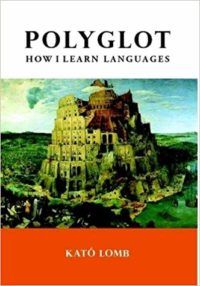 If you're a existent language and literature geek, yous'll probably somewhen want to check out Kató Lomb'south Polyglot: How I Learn Languages. If you don't know who Kató Lomb was, she was basically a superhero. She taught herself more than a dozen languages, and ostensibly did a lot of this merely by reading novels—closely. I have to warn you, her book tin can be frustrating, considering she doesn't really go into super fine detail about what she did. But it's exciting to see a great heed at piece of work and take what you can from her musings.
Despite its loose parameters, the Lomb method is based on a solid premise. It's about really committing yourself to one text that intrigues you, spending a lot of time dissecting it, and squeezing all the learning you tin can out of information technology.
You lot may desire to consider combining the terminal three methods on this list, because the trifecta of close reading, instant translation, and a familiar text probably but increases your chances of enjoyment and success.
Reading in another language tin be an stop in itself. Information technology doesn't always take to be virtually reaching verbal fluency. Or whatever kind of fluency for that affair. But if fluency is the goal, reading is one extremely helpful style to motion towards it.
In any instance, if y'all love what you're reading, that can turn the whole language learning procedure from a job into a joyride.
Reading a Book in a Foreign Language
Source: https://bookriot.com/how-to-read-in-another-language/

Post a Comment for "Reading a Book in a Foreign Language"